Get real about the Royals!
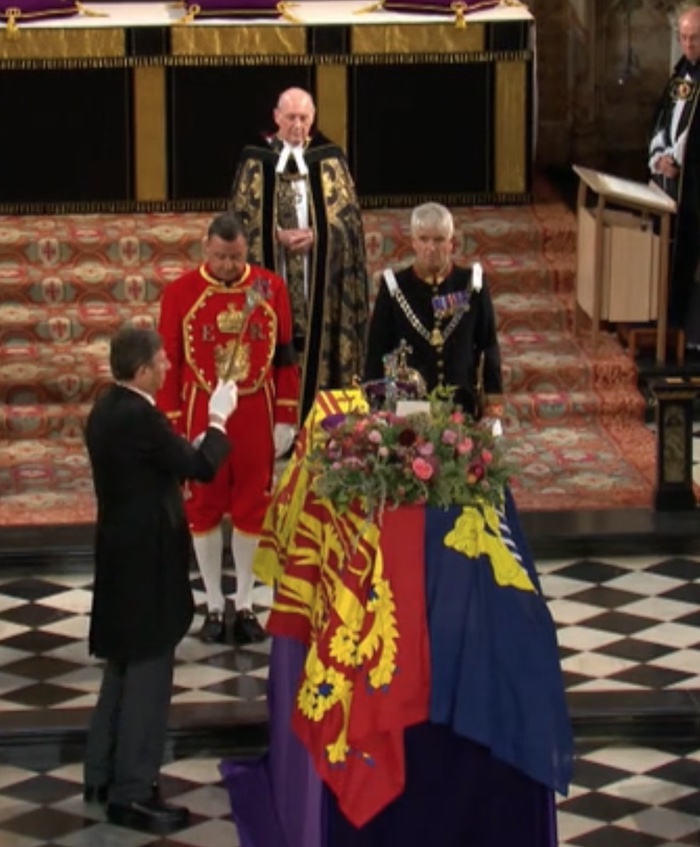
The Queen died Thursday before last and was buried today. As with Prince Philip last year, we saw the BBC cut off all its programmes at the flick of a switch to go to the news report (the children’s channel CBBC did it a little bit more gracefully and went to its own children’s news programme, Newsround) and since then, local radio at least seems to have been non-stop coverage of royal business and funeral preparations and Queen appreciation programmes. Her funeral was today which was declared a bank holiday, which means that a number of public services and businesses will close for the day although they do not have to and, of course, retail and leisure businesses rarely do. This time, however, many have done, either “as a mark of respect” or “so that our colleagues can pay their respects”, with some of them forgetting that they should be paying the public, or their customers, a bit of respect as well.
One of the companies involved, for example, is Center Parcs, a chain of sports and leisure ‘villages’ where people spend a week or two enjoying indoor leisure and sports facilities and restaurants and exploring the surrounding countryside if they want. To begin with, they announced last week that they had decided to simply close all their ‘villages’, requiring guests to simply leave and find alternative accommodation. When this resulted in an enormous backlash (or when someone pointed out that it would put them in breach of contract), they decided that they would not turf all their guests out but just close all the facilities, including the restaurants, and not check in any new guests. This still put people who booked their holidays weeks or months ago at a loose end; many of the locations are in places where there are not that many hotels or restaurants, such as the Elveden Forest park in south Norfolk, and I suspect that some of those will hike their prices if there is a spike in demand caused by Center Parcs’ decision. As for those who remain at the ‘village’ despite the closed facilities, they are on holiday and paid for a holiday. They don’t owe the Queen the ‘respect’ of spending all day in front of the TV; CP owe them what they paid for.
Similarly, the National Trust have closed all the attractions they care for where there are staff, i.e. the homes and gardens (their countryside and coastal lands are still open, though facilities such as toilets are closed), for the same reason. Do they not realise that people are off work unexpectedly with children who need entertaining because they are off school unexpectedly? They cannot be expected to just watch TV all day, and certainly a state funeral will not be entertainment for a lot of children (some families would not even take their younger children to a family funeral). If their staff and volunteers wanted to see the funeral then surely they could show it on a screen in the cafe and/or gift shop, but I suspect many of them would quite like to get away from it all themselves, much as those who would visit also want to. To put this into perspective, the Royal Parks (except for the smallest, Victoria Tower Gardens next to Parliament) are all open during the whole period as are the cafes and restaurants within them.
The two biggest TV networks, the BBC and ITV, cleared their schedules and broadcast the funeral on all of their channels that operate during the daytime (ITV has six, including a children’s channel, and they all broadcast the funeral; the BBC did not do this on their children’s or Welsh language channels). Channel 4’s main channel was dedicated to royal tributes and the 1953 film of the Queen’s coronation, narrated by Sir Lawrence Olivier (the other channels had normal programmes). In the week and a half in between, local radio in particular seems to have been non-stop royal coverage and tributes; any time I have turned on BBC London during this period, I hear them talking about the Queen. This was too much; local radio is meant to be about local life and we have lives to lead and things to talk about other than the Queen. The coverage has at times gone to extremes in fawning on the Queen and her family; the evening after she died, TV news presenter Clive Myrie was shown on national TV (the clip was widely shared on social media) claiming that the fuel price crisis had paled into insignificance now that the Queen had died; the issue has not had much coverage since, even though that was what was being discussed in Parliament the day she died. There were claims that the proclamation of the new king was a momentous or historic occasion. It is not. It is the continuity of an institution; when a king or queen dies, their heir takes their place.
There was an interview with the New Zealand prime minister, Jacinta Ardern, in which she said that the Queen had told her (with regard to being a new mother in a highly responsible job) that you “just get on with it”. This advice, which all of us have heard from lots of people when dealing with difficult situations, would be dismissed as an unhelpful platitude coming from anyone else, but coming from an extremely wealthy woman whose children were cared for by nannies and sent to boarding schools and who ran a family business, not a country, this is somehow a great pearl of wisdom. The journalist Michael Crick called the mourning period “a shameful period for British journalism, in which scrutiny, challenge, perspective, balance and common sense have been ditched in favour of fawning banalities”.
There seemed to be a huge element of conformity to the response to the Queen’s death — the closures of shops and leisure centres in particular — which I started to suspect might be based on fear. Surely not every business had that many employees who wanted time off to “pay their respects”? Even some food banks shut for the day “out of respect”. While it has become normal for large shops to open on Bank Holidays, some of the organisations involved do not even close on Easter Sunday (when large shops are required to close) and some not even on Christmas Day (such as Center Parcs). Worse still, some people had operations postponed, sometimes because NHS trusts just went into bank holiday mode but in other cases because the holiday caused staff shortages by requiring staff with children to take the day off because school was closed. While, of course, emergencies were still seen to, people who had been waiting months for ‘elective’ surgeries like fibroid removals now have to wait several more weeks if not months, into the late autumn and winter when the Covid situation is uncertain. These are people who were suffering, and will now have to suffer a while longer so that people can pay respects they did not owe to someone they did not know.
Similarly, a number of people I know have children with learning disablilities and one of them tweeted that his son, who did not know who the Queen was, was highly stressed by the closure of everything he might have expected to be able to do today. (Some people with learning disabilities love the Queen and/or all things royal, but some have no awareness of either.) When I heard of Center Parcs’ decision, I thought of such families who would have to explain to their relative why they had to leave a day early, or could not use any of the facilities. Autistic people in particular need routine; they need things to run according to plan, and sometimes cannot cope with unexpected changes. Disruption of this nature has been known to put a person with a learning disability in hospital. It is that serious.
We as a society need to get real about the Royals. They are not better than the rest of us. They are not special. They are not gods or saints. They are just wealthy people. The rest of us should not have to tolerate undue inconvenience or suffering to join them in their grief for their mother or grandmother, any more than the rest of the country would join us if a family member died. I do not hate the Queen; I defended her when people attributed to her things that had been the doing of politicians, even if in her name. I had a certain amount of personal respect for her; she did the job fairly well and was a good ambassador for the country. She was graceful and ladylike. Charles will have quite a task living up to her record. Yet I did not know her, I do not grieve her passing; I feel a little bit sad, that’s all. That’s as much as can be expected of any ordinary person. I have no objection to the pomp and ceremony and the big state occasion, but the rest of us should not have been expected to disrupt our lives for it.
