AI revolution? What revolution
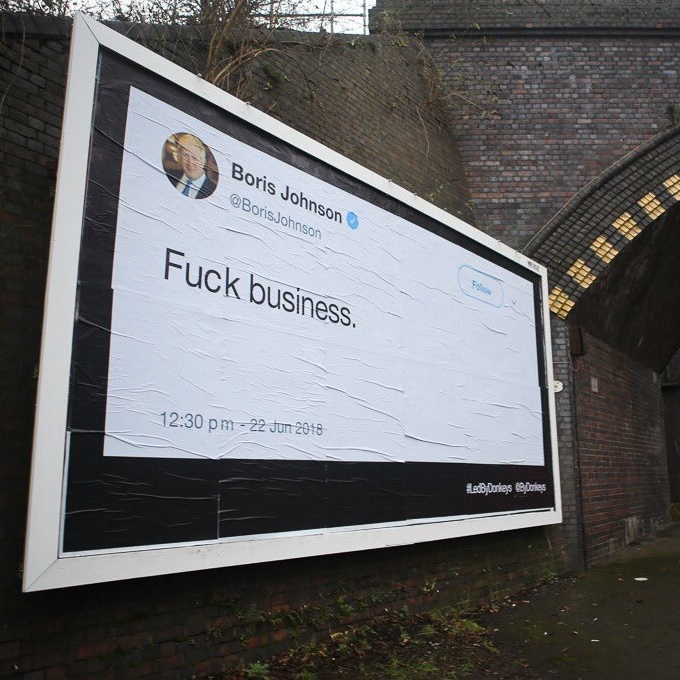
The other day I heard the former British prime minister Tony Blair being interviewed on Radio 4, twenty minutes after the more recent former PM Rishi Sunak being interviewed on the same channel. Blair was promoting a long essay he had written about what he sees as the directionless state of the Labour government and the essay and interview has been described as a repudiation of everything he stood for when he was PM. Both, however, eagerly promoted something they called the “AI revolution”, and when the interviewer put it to Blair that he was advancing the interests of the tech giants that fund his think-tanks and his pal Larry Ellison (of Oracle), he said that he promoted it because it was great technology. I remarked on my socials after hearing it that Blair had not learned from the principal mistake of his time in office, of putting the needs of business over everything else including the needs of ordinary people (a major example being opening the doors in 2004 to east European workers, an action not taken by the rest of the EU as had been the case previously when countries with weaker economies joined, a disastrous mistake which ultimately cost us our EU membership), which goes some way to explaining why Boris Johnson could get away with saying “f*** business”, a remark which would have sunk any mainstream politician under previous Tory governments.
In his essay, he posits that “the technology revolution led by developments in artificial intelligence … will change everything”, that “governing in the age of AI will be the principal challenge”:
There is no point in debating whether this technological revolution is a good or bad thing. Just know it is a ‘thing’. In fact, it is ‘the thing’. It will displace jobs, though creating new ones, but no one yet knows the full consequence. Companies and countries will rise or fall on the back of it. It will revolutionise the private sector and should in time revolutionise public services and government. Yet people in most countries, including Britain, have no idea what is about to hit them.
What is a revolution? Usually the term means an upheaval that leads to major, and at least partly positive, social and political change. In practice, ‘revolutions’ are often the result of military coups, palace coups or civil wars and sometimes bring about regimes as tyrannical as those they replaced (e.g. Russia). The recent rise of a particular type of AI may seem revolutionary to those able to generate content easily that previously would have taken imagination and skill, but to many of us it feels more like a reactionary coup in the public space and takes power out of the hands of ordinary people and puts it in the hands of tech giants. Its ability to impersonate a human being, on the face of it more convincingly than anything previously available, is a gift to fraudsters and other species of criminals and scoundrels; it frees companies and other large bodies, including government departments and local councils, from having to engage with their clients on a human-to-human level. To give an example, when trying to complain about the poor signal on my mobile phone in my local town centre, I first took to Twitter, on which there was previously an account run by actual people; now the responses are by a chatbot, which told me to call 150, the network’s customer service number. That offered me no way of talking to a human being about the problem, only a computerised menu, which ultimately told me to use the provider’s mobile app, which told me there was no problem with the signal at my home address, which is true. That was not my complaint; my complaint was about the centre of the nearest town, which has had poor signal for years.
AI has been described by Cory Doctorow (of Enshittification fame) as “the asbestos in the walls of our technological society, stuffed there with wild abandon by a finance sector and tech monopolists run amok”, something that will in the future be ripped out of systems as the mineral was from buildings. The social sphere, both the platforms that have corralled social interaction online and the video sharing spaces, have been filled with junk text that is full of inaccuracy, junk videos and poorly-enhanced pictures, often portraying a post that was never real. Schools and colleges fight to make sure nobody gets qualifications on the basis of auto-generated and plagiarised essays while students find that they are penalised because their work is misidentified as AI because of some stylistic detail such as the “em-dash” (rather than the obvious inaccuracies that are normally the red flag for AI-generated text; people assume that computers do not make mistakes, the same assumption — baked into law — that led to the Post Office accounting scandal). Job applicants are now being screened by AI before a human being even reads their application, often complaining of getting no response at all. AI requires large data centres, which require water for cooling, which comes out of the public water supply, often at the expense of locals’ domestic water. It has disrupted the chip industry, resulting in one major supplier of consumer memory withdrawing from that market as it is more profitable to supply the AI industry.
Some will say that the poor output of AI in 2026 is because it is new, and that refinements will result in better output in the future. A mineral does not change — asbestos is still asbestos — but technology does. Maybe this will mean better customer service, but maybe it will also mean fakes so convincing that we cannot trust a picture or video anymore, if we can even now. But to bring it back to Tony Blair, it is noticeable that his essay makes no reference to regulating the use of AI such that it does not become a blight on the public sphere, online or off, or an obstacle to or substitute for public or customer service; rather, he talks of “governing in the age of AI” as if the changes wrought by it were inevitable, demanding that the planning system be sacrificed to it and North Sea oil and gas resources be thrown at it. We must make it compulsory for large companies to employ customer service staff who live here and can communicate with British customers fluently, and the same goes for central and local government bodies, and not allow companies to sack people en masse in favour of letting AI do their job cheaply, but invariably worse and less satisfyingly and more frustratingly for the customer or the citizen. We must not cave into demands for data centres which will put a drain on public resources, especially the water supply. In a democracy, AI must remain “on tap, not on top” (if tolerated at all) and its demands never allowed to trump people’s needs. British politicians have a poor record of striking such balances; they now have the challenge of finding ways to employ AI in ways that are beneficial to society rather than to those who merely seek power or profit and care nothing about its environmental dangers, resource hunger or the technology’s own enormous potential for harm.



